
Key Takeaways
- Ellipticals deliver low-impact cardio that raises your heart rate without the joint pounding of running. An MRI-based study found elliptical training was linked to less knee cartilage wear than several higher-impact activities.
- A 30-minute elliptical workout burns roughly 270 to 380 calories, depending on your body weight and effort level, making it a reliable tool for weight management.
- Elliptical interval training can raise your VO2 max, a key marker of cardiovascular fitness, by roughly 5 to 15 percent in as little as six to eight weeks.
- Moving handles turn the elliptical into a full-body workout, engaging your arms and back while your legs and core do the rest.
- The elliptical is a strong fit if you're managing joint pain, recovering from an injury, new to exercise, or cross-training for another sport.
Also called a cross-trainer, the elliptical is one of the most useful machines in the gym, and it’s popular for a reason. It lets you build cardio fitness, push your intensity when you want a challenge, and stay consistent when higher-impact workouts feel like too much. With a few adjustments to resistance, incline, and pace, the same machine supports steady endurance work, interval training, and joint-friendly cross-training.
Here’s a closer look at the top eight benefits of using an elliptical.
The 8 Advantages of Elliptical
Ellipticals are popular because they keep your feet moving in a steady, low-impact path, and many models include moving handles that let you engage your upper body while you train. This combination creates a workout you can scale up or down quickly, which makes it useful for beginners and experienced exercisers alike.
Learn more about the top eight benefits of cross-trainers below:
-
Low-Impact Cardio for Joint Comfort
An elliptical gives you cardio without the repeated foot strike of running. Since your feet stay connected to the pedals, the stride feels smoother on your knees, hips, and ankles while still raising your heart rate. In an MRI-based study assessing knee cartilage changes, elliptical training was associated with smaller increases in knee joint degeneration compared with several higher-impact activities.
-
Cardiovascular Endurance and Aerobic Fitness
Regular elliptical sessions build your aerobic capacity, your body's ability to use oxygen efficiently during exercise, which is one of the strongest predictors of long-term heart health. Research on elliptical interval training shows it can raise VO2 max by roughly 5 to 15 percent in as little as six to eight weeks. You can keep that progress going by gradually increasing your duration, resistance, or interval intensity.
-
Full-Body Involvement With Moving Handles
With moving handles, the elliptical becomes a whole-body workout. Your arms and upper back work through a push-pull pattern while your legs drive the stride and your trunk stabilizes your posture. Involving more muscle groups helps you reach a challenging effort level without needing high-impact speed.
-
Calorie Burn and Weight-Management Support
A 30-minute elliptical workout burns roughly 270 to 380 calories: about 270 for a 125-pound person and closer to 380 for someone at 185 pounds, with the exact number shifting based on intensity.
The real advantage is consistency. Because the elliptical is easier on your joints than higher-impact cardio, you're more likely to keep showing up for it, and showing up regularly is what actually drives weight-management results over time. You can raise your calorie burn further just by increasing resistance or incline, without needing to speed up.
-
Lower-Body Muscle Engagement
Like cycling, the elliptical primarily targets your glutes, quads, hamstrings, and calves. Stronger, better-conditioned legs help you sustain higher efforts for longer. Increasing resistance and incline typically shifts more of the work to your glutes and hamstrings.
-
Core Stability and Postural Strength
Staying upright instead of leaning on the console keeps your core working for the entire session. Research on elliptical mechanics has found the stride activates the back extensors, shoulders, and obliques, the muscles that stabilize your spine and support your posture, throughout the movement. That steady engagement is what helps you maintain good form even as your legs start to tire.
-
Versatility for Steady-State and Interval Sessions
Ellipticals make it easy to change your training focus without switching equipment. Build endurance with longer, moderate sessions, or add short bursts of harder effort for interval days. This versatility keeps your training progressing as your body adapts to new demands.
-
Injury-Friendly Cross-Training and Return to Exercise
Ellipticals are widely used for cross-training because they let you train cardio with reduced impact. Studies suggest that aerobic capacity measures on an elliptical aren't meaningfully different from treadmill testing, making it an excellent option for maintaining fitness while you recover from injury.
Who Benefits Most From an Elliptical?
The elliptical is a particularly strong fit if you:
- Deal with joint pain or arthritis and need cardio that won’t aggravate your knees or hips
- Are returning to exercise after an injury or a long break
- Want to build cardiovascular fitness without the impact of running
- Cross-train for another sport, like running or cycling, and need a lower-impact way to keep your engine strong
- Are new to exercise and want a machine that’s easy to pick up on day one
What Are the Disadvantages of an Elliptical?
Ellipticals have trade-offs, and most are easy to manage with smart programming. Since the elliptical doesn’t involve the repeated “pounding” of activities like running or jumping, it may not support bone strength in the same way, so adding strength training is a smart complement.
Some people also find it easy to coast, lean forward, or rely heavily on the handles, which can reduce how much work the legs and trunk are doing. To avoid this issue, choose a resistance level that makes you work hard, keep your posture tall, and treat each session like a planned workout instead of passive movement.
Is 30 Minutes on the Elliptical Enough?
Thirty minutes can be enough, especially when done at a moderate effort and repeated consistently through the week alongside strength training.
For most goals, your weekly total and effort level matter more than any single session’s length. If you’re building general fitness, 30 minutes several days a week is a solid baseline.
Here’s a simple structure if you’re just getting started:
- Warm-up: 5 minutes at an easy pace
- Main set: 15 to 20 minutes at a moderate effort, where you can talk but not sing
- Cooldown: 5 minutes at an easy pace
Once that feels manageable, add one harder session per week. Keep two workouts steady and comfortable, and turn the third into intervals: alternate one minute of hard effort with one to two minutes of easy recovery.
Does the Elliptical Burn Belly Fat?
The elliptical can support belly fat reduction by helping you burn calories consistently, but spot reduction isn’t reliable since fat loss happens throughout the body, not in one targeted area.
Belly fat tends to decrease as your overall body fat decreases, which comes from a sustained calorie deficit over time. The elliptical helps because it’s a repeatable form of cardio most people can do often without feeling beat up afterward.
For the best results, pair consistent cardio with strength training, sleep, and nutrition habits you can actually stick with. Over time, that combination improves fitness and supports a healthier body composition, midsection included.
Elliptical vs Treadmill: Which Is Better?
Neither is better across the board. The treadmill is the better choice for running-specific and impact-based goals, while the elliptical tends to win on joint comfort and long-term consistency.
If you’re training for running performance, treadmill work is more specific since it matches the mechanics and impact demands of running. If you want a lower-impact option that still challenges your cardiovascular system, the elliptical is usually easier to repeat frequently without burning out your joints. The best machine is the one that fits your goals and keeps you training consistently week after week.
Receive the Benefits of Using an Elliptical at Defined Fitness
At Defined Fitness, you can use the elliptical to build steady cardio fitness, add intervals for a higher-intensity challenge, and stay consistent with a joint-friendly option. Whether you’re just getting started or refining a structured training week, the elliptical is an efficient way to build endurance and keep your momentum going.
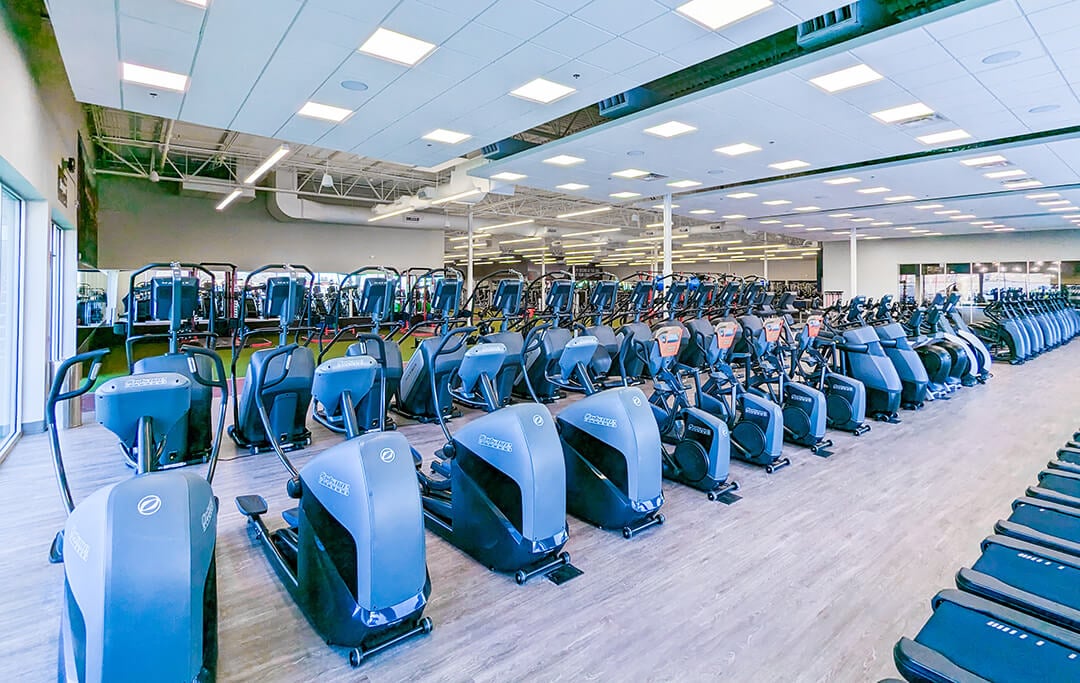
Our clubs feature full cardio decks in Santa Fe, Albuquerque, Rio Rancho, and Farmington, New Mexico, so we’re confident you’ll find a location that works for you.
Learn more about our ellipticals and other cardio equipment, or review our membership options to try one out for yourself.