

Key Takeways
- Zone 2 cardio refers to exercising at a steady, moderate pace where you can usually talk in full sentences, your breathing is deeper and a little faster, and singing feels tough.
- A person’s zone 2 heart rate often falls between 60% and 70% of their estimated max heart rate
- Zone 2 cardio benefits include better cardiorespiratory fitness, improved endurance, and increased fat burning
- A simple weekly goal is two to three zone 2 sessions, building toward at least 150 minutes of moderate cardio across the week
- Zone 2 workouts can be as simple as an incline treadmill walk, a steady bike ride, or jogging with walking intervals
If you’re new to exercise, want to burn more fat, or enjoy moderate-intensity workouts, you’ll want to try zone 2 cardio workouts. This type of cardio makes it possible to build your aerobic base and increase your endurance in very manageable exercise sessions.
As you consider adding zone 2 cardio exercises to your workout routine, review our guide to zone 2 cardio and how to calculate it.
What Does Zone 2 Cardio Mean?
Zone 2 cardio refers to aerobic exercises that you perform at a moderate intensity. In this zone, your heart rate and breathing will pick up, but you can still talk in full sentences for most of the workout.
Many training plans use a five-zone scale. Zone 1 is very easy, while zone 5 is close to your max. Zone 2 sits near the low end of the middle, with the exercise meant to feel smooth and easily repeatable.
A simple way to check your effort is the talk test. When you’re in zone 2, conversation remains possible while singing usually feels out of reach.
What Heart Rate Is Zone 2?
Zone 2 typically lands around 60% to 70% of your estimated max heart rate.
Zone 2 Cardio Benefits
Zone 2 training supports heart health, endurance, and efficient energy use, and it helps you build fitness in a way that feels sustainable.
Below you can find some of the top five benefits of zone 2 cardio:
- A stronger aerobic base: Zone 2 builds cardiorespiratory fitness, which is how well your heart, lungs, and muscles use oxygen during movement. In a study that compared training intensities, the moderate-intensity group improved VO2 max by about 10% in six weeks. This improvement in VO2 max makes it so your muscles, lungs, and heart use oxygen more efficiently, leading to a stronger aerobic base and better heart health.
- More endurance with less stress: Zone 2 helps you spend more total time moving at a steady pace, which supports endurance gains over time. As you continue to exercise and build your aerobic base, you’ll likely notice that you can exercise longer in higher zones while maintaining performance.
- Higher chance you continue to exercise: In a study that compared moderate continuous cycling with interval-style cycling, all participants preferred the moderate session. Since moderate-intensity exercise can feel easier and more enjoyable, it can be a more sustainable option for those who get discouraged by workouts that feel too difficult or stressful.
- Support for fat use as fuel: Zone 2 sits near an intensity where your body can use a meaningful amount of fat alongside carbs. In a 10-week supervised program that trained people at their personal “max fat oxidation” intensity, participants increased their fat oxidation rate from 0.38 to 0.45 grams per minute. When this rate goes up, it often means your body can burn a bit more fat at easy-to-moderate intensities, which supports steadier energy during longer workouts.
- A great match for busy schedules: You can fit zone 2 into real life with a brisk walk, a bike ride, or an incline treadmill session. Zone 2 also fits well on strength training days as a warmup, a cooldown, or a separate quick session.
How to Calculate Zone 2 Heart Rate
Before you can determine what heart rate range you should aim for while doing zone 2 workouts, you need to know your max heart rate. With this information, you can quickly calculate what heart rate range you need to stay within during a zone 2 cardio session. Learn more about how to calculate your max heart rate and your zone 2 range below:
How to Calculate Your Max Heart Rate
You can estimate your max heart rate using one of two common formulas. The classic quick estimate is 220 − age, which is easy to remember and shows up often on cardio equipment and in apps. While it’s a helpful starting point, it can miss your true max by 10 to 12 beats a minute.
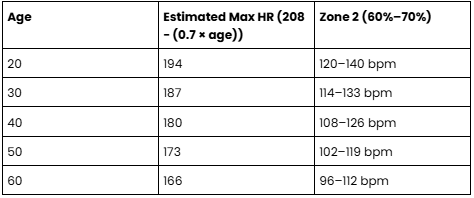
Another popular option is 208 − (0.7 × age), which was proposed as a more accurate formula for calculating max heart rate compared to the older 220 – age formula. People often choose this newer estimate because it’s based on a large set of lab-tested results in healthy adults, and it often fits adults better across ages.
If you want the simplest starting point, use 220 − age. If you want an age-based estimate that often aligns better for adults across ages, try 208 − (0.7 × age). When you do both calculations and the two results differ, treat them as a range. You can also check on your breathing and ability to hold a conversation while exercising to determine which result is more accurate.
How to Calculate Zone 2 Based on Your Max Heart Rate
Once you have an estimated max heart rate, find your zone 2 range by multiplying it by 0.60 and 0.70. The results of this calculation will give you the heart rate range you need to stay within to remain in zone 2.
During the workout, confirm the effort by feel. Your breathing should be active, you should be able to talk in full sentences most of the time, and singing should feel tough. If you can only get out a few words before you need a breath, ease up until conversation feels smooth again.
Zone 2 Heart Rate by Age Chart (220 - Age Formula)
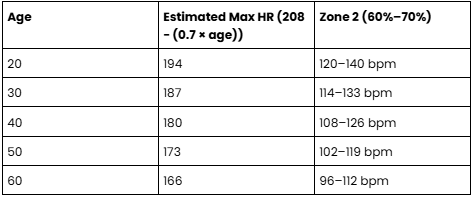
Zone 2 Heart Rate by Age Chart (208 − (0.7 × age) Formula)
How to Find Zone 2 in the Moment
- Check your heart rate and aim for a steady range rather than a single perfect number.
- Use the talk test. If you’re in zone 2, you can speak in full sentences, and your breathing feels active.
- Notice your pace, zone 2 feels like you can keep going for at least another 30 minutes.
Zone 1 vs Zone 2 vs Zone 3 vs Zone 4 vs Zone 5 Cardio
Zone 1 feels easy, zone 2 feels steady and conversational, zone 3 feels comfortably hard, zone 4 feels hard and focused, and zone 5 feels near your max.
Here’s a simple way to picture the differences between zones:
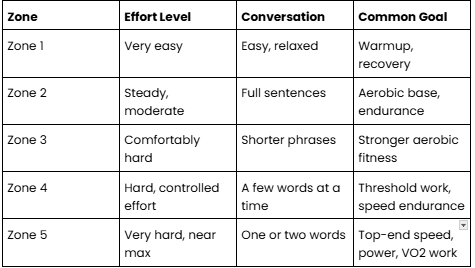
All five zones can have a place in a balanced workout plan. Zone 2 tends to be the workhorse because it is repeatable and flexible, and higher zones can be used in short doses to add variety and challenge.
How Much Zone 2 Cardio Per Week?
A practical goal is 2 to 3 zone 2 sessions per week. Once you get used to this interval, you can build toward about 150 minutes of moderate cardio across the week.
If you are starting fresh, consistency matters more than perfection. Here are three friendly options:
- Option A: 2 sessions, 30 minutes each, plus one longer walk on the weekend.
- Option B: 3 sessions, 30 to 45 minutes each, spread across nonconsecutive days.
- Option C: 4 shorter sessions, 20 to 30 minutes each, especially on busy weeks.
Strength training can still stay in the mix. Many people enjoy zone 2 on days between strength workouts, or as a gentle finish after lifting.
3 Great Zone 2 Workouts
The following zone 2 workouts keep effort steady, support aerobic progress, and fit many fitness levels:
1) Incline treadmill walk
A treadmill is a simple way to dial in zone 2 training, helping you easily control your pace and heart rate.
- Warm up for 5 to 8 minutes with an easy walk
- Add a small incline and walk at a pace that brings you into zone 2
- Hold steady for 20 to 40 minutes
- Cool down for 3 to 5 minutes
2) Bike or elliptical steady ride
Cycling and using ellipticals can be great options for zone 2 exercises that feel smooth and joint-friendly.
- Warm up for 5 minutes
- Increase resistance until your heart rate rises into zone 2
- Hold a steady cadence for 25 to 45 minutes
- Finish with 3 to 5 minutes of cool down
3) Zone 2 running, run-walk style
Running in zone 2 can be great, and many runners use short walk breaks to stay steady.
- Warm up with 5 minutes of brisk walking
- Alternate 3 minutes of easy running with 1 minute of walking
- Keep your effort at a level where you could still hold a conversation with someone else
- Build your total time from 20 minutes to 40 minutes over a few weeks

Zone 2 Cardio FAQs
Is Zone 2 Cardio Just Walking?
Walking can be zone 2 when it is brisk enough to raise your heart rate into a moderate range, and your talk test lines up with steady effort.
For many people, a casual stroll feels like zone 1. A brisk walk, a hill, or a treadmill incline often brings you right into zone 2.
How Do I Find My Zone 2 Heart Rate?
Start with the simple math from the zone 2 calculation section. Then check your effort. If you can talk in full sentences and singing feels tough, you are in the right neighborhood.
Is Zone 2 Cardio Better for Fat Loss?
Zone 2 can support fat loss by helping you build steady weekly cardio time, and it can also improve your body’s ability to use fat for fuel.
Fat loss depends on many pieces, including consistency, nutrition, and total weekly movement. Zone 2 helps because it is easier to repeat. It is also a great partner to strength training, which supports improvements to muscle mass and metabolism.
How Many Minutes of Zone 2 Are Enough?
Many people see progress with 30 to 60 minutes per session, and weekly goals often land around 150 minutes of moderate cardio across the week.
If 30 minutes feels like a win, you are on the right track. Over time, you can build one session longer, like 45 to 60 minutes, and keep the rest at a length that fits your schedule.
How Often Should I Do Zone 2 Cardio?
Two to three zone 2 sessions per week is a great starting point, and you can add more short sessions as your routine becomes comfortable.
A steady rhythm helps. You might do shorter zone 2 sessions on Tuesday and Thursday, then add a longer session on Saturday. Many people also enjoy a short zone 2 session after strength training.
Can Beginners Do Zone 2?
Beginners can do zone 2 right away by choosing a comfortable zone 2 exercise, using the talk test, and building time gradually. Walking, cycling, and the elliptical are all great starting points for beginners.
Is Zone 2 Good for Runners?
Zone 2 is great for runners because it builds aerobic endurance, supports recovery, and helps many runners add mileage with a steady effort.
If your heart rate climbs quickly while running, run-walk intervals can keep you in zone 2. Over time, your easy pace should improve, helping you maintain consistent effort that doesn’t exceed zone 2.
Should I Track Zone 2 by Pace or Heart Rate?
Heart rate is a strong guide for zone 2, and pace can be a helpful companion, especially on flat routes or steady machines.
Heart rate reflects how your body is working on that day. Pace reflects what you are doing in the moment. On hot days or when life is busy, heart rate can rise at the same pace. Using both helps you stay steady and learn your patterns.
Is Zone 2 Good for Runners?
Zone 2 is great for runners because it builds aerobic endurance, supports recovery, and helps many runners add mileage with a steady effort.
If your heart rate climbs quickly while running, run-walk intervals can keep you in zone 2. Over time, your easy pace should improve, helping you maintain consistent effort that doesn’t exceed zone 2.
Chest Strap vs Wrist HR: What’s Better for Zone 2?
A chest strap is often the most precise for heart rate, and wrist tracking is a convenient option that works well when paired with the talk test.
If you love accurate numbers, a chest strap can feel reassuring. If you prefer simplicity, a watch can still support great training, but you’ll need to remember that a wrist heart rate monitor tends to be less accurate.
Either way, your breathing and conversation give you a reliable way to determine if your heart rate tracker is correct and you’re in zone 2.
Stay in Zone 2 at Defined Fitness
If you’re looking for a gym perfect for zone 2 exercises in Santa Fe, Albuquerque, or Rio Rancho, New Mexico, Defined Fitness has you covered. At our clubs, you can find a wide variety of exercise equipment that makes staying in zone 2 easy. For example, we have treadmills, rowing machines, ellipticals, and pools for lap swimming that all support zone 2 training.
Learn more about our membership options, and review our club locations to find one near you today!