

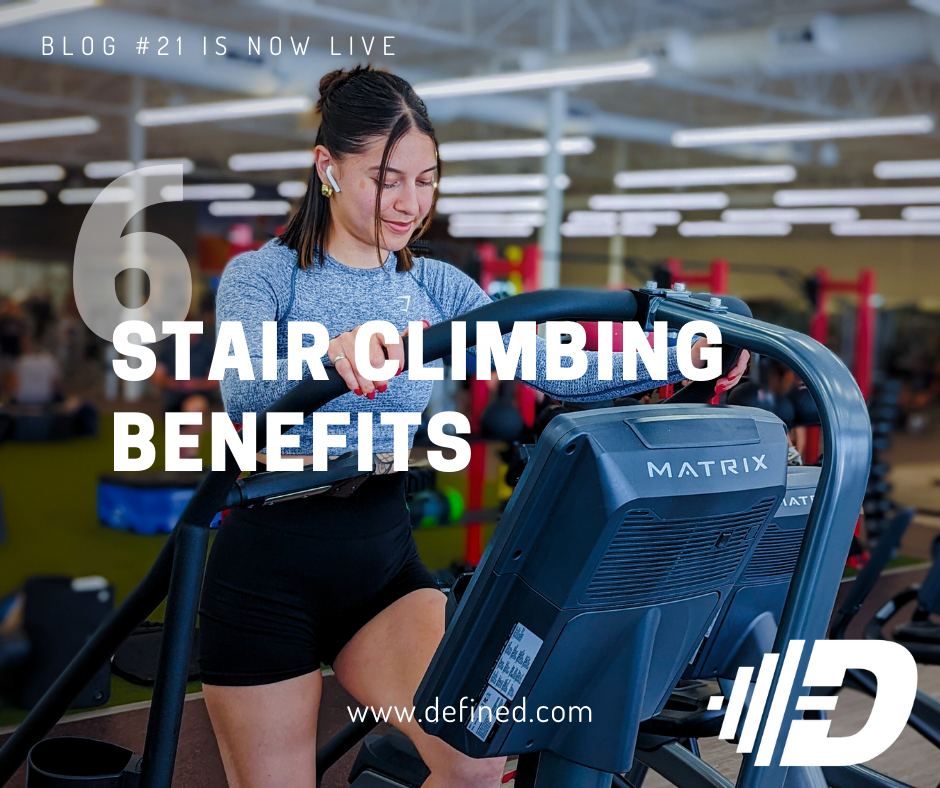
Stair climbing can be a great workout, as it improves your cardiorespiratory fitness, supports heart health, builds lower-body strength, and burns calories.
With so many benefits and the option to decide between real stairs or a stair climber, stair climbing is a highly accessible workout that can deliver some solid results. If you’re interested in learning more about why stair climbing is an excellent addition to your workout, review our guide to stair climbing today!
Why Stair Climbing Is a Great Workout: 6 Stair Climbing Benefits
Whether you’re looking to boost your heart health, increase muscular endurance, or make serious gains with your cardio, stair climbing can help. Find out more about the following top six benefits of stair climbing:
1. Improves Cardiorespiratory Fitness
Stair climbing is a sneaky-good way to build endurance because it pushes your heart and lungs to work harder than flat-ground cardio.
One key marker of cardiorespiratory fitness is VO2 max, which measures how efficiently your body uses oxygen during intense effort. When that number goes up, workouts feel more manageable and everyday tasks can feel easier, too. A 2005 study found that an eight-week stair-climbing routine increased VO2 max by about 17% in sedentary young women.
Other research reviews on stair-climbing programs have found similar improvements in aerobic fitness when people train consistently for several weeks.
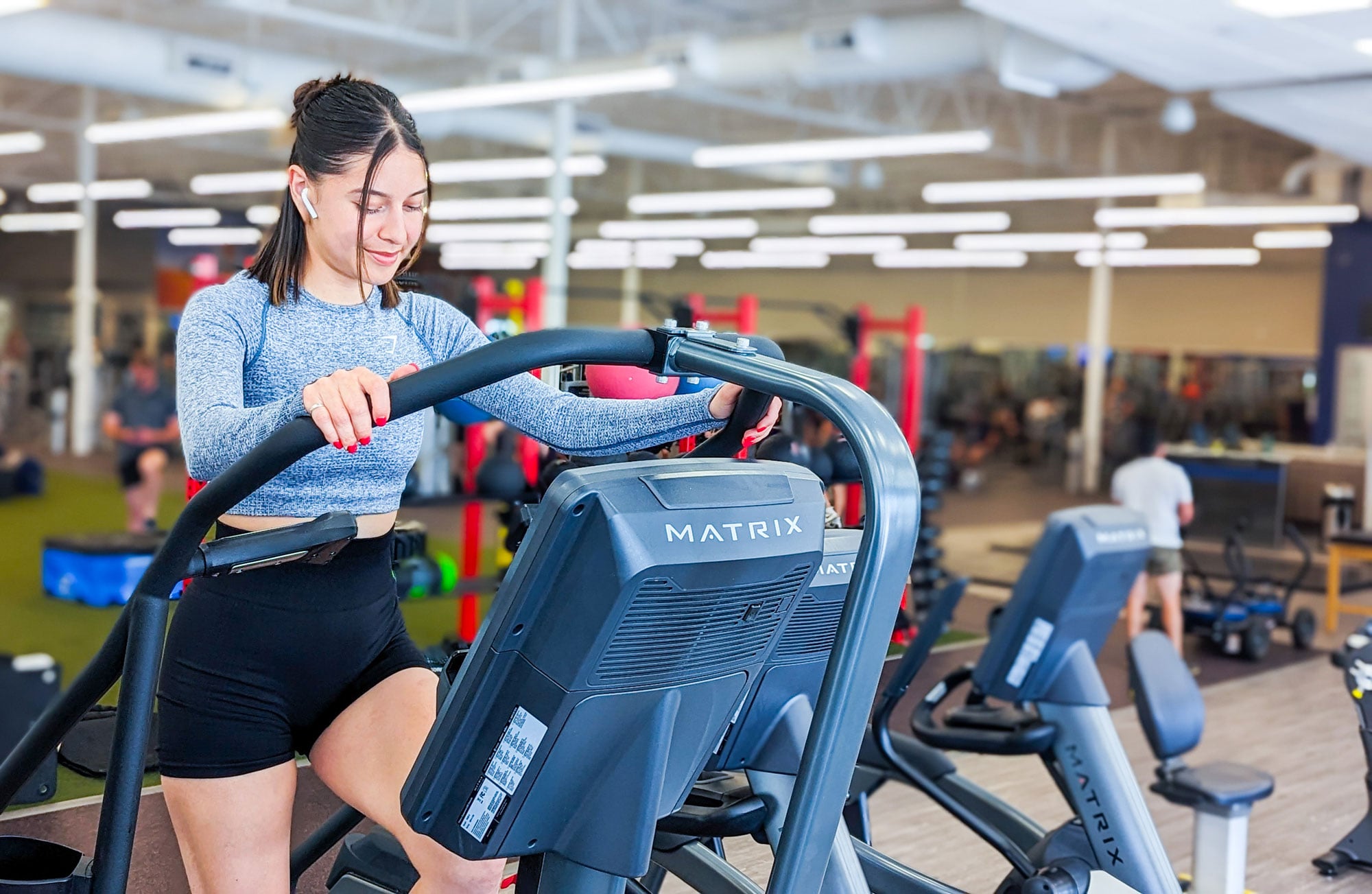
2. Supports Heart Health
Stair climbing can reach moderate to vigorous intensity quickly, making it a time-smart way to train your cardiovascular system. With regular sessions, you are giving your heart a steady challenge that can support healthier blood pressure, better circulation, and stronger overall endurance.
Large population research suggests this habit can matter over the long haul. A major UK Biobank analysis found that climbing more than five flights per day was associated with a lower risk of atherosclerotic cardiovascular disease. While observational data can’t prove cause and effect, it supports the idea that frequent stair time is a simple, practical, heart-healthy move.
3. Builds Lower-Body Strength and Muscular Endurance
During a stair climbing workout, every step is a mini strength rep. Since you’re lifting your body weight against gravity, stair climbing naturally targets the glutes, quads, hamstrings, and calves. Over time, that steady push can build stronger legs and better muscular stamina, which carries over into hiking, sports, and everyday mobility.
In a 2018 randomized study of postmenopausal women with stage 2 hypertension, 12 weeks of stair climbing increased leg strength while also improving key heart-health markers. A 2025 trial in older adults also found that stair-climbing training improved lower-body muscle power, similarly to machine-based resistance training.
Whether you are on real stairs or a stair climber, you are training the same big lower-body muscles in a way that rewards consistency.
4. Boosts Calorie Burn and Supports Healthy Body Composition
Stair climbing is challenging enough to deliver a meaningful calorie burn in a relatively short window. One helpful way to describe this intensity is with METs, or metabolic equivalents, which compare how hard your body is working to resting energy use. Stair climbing often falls into a vigorous-intensity range for many adults.
Classic energy-cost research places stair climbing around 8.6 METs, and a 2012 study estimated stair ascent at roughly 8.5 to 9.2 calories per minute, depending on technique (whether you take one stair or two stairs per step, with two stair steps having the higher MET).
Paired with smart nutrition and a well-rounded routine, that kind of steady, high-effort work can support fat-loss goals while helping you maintain strong, athletic legs.
5. Supports Bone Health
Stair climbing is a weight-bearing workout, meaning your bones support your body through repeated load. This kind of mechanical stress can help your body maintain stronger bones over time, which matters for long-term resilience, confident movement, and healthy aging.
Research in postmenopausal women found that stair climbing was associated with higher hip and whole-body bone mineral density. A 2018 review also suggests that routines combining low-impact activities like walking, jogging, and stair climbing may help slow bone loss at key sites like the hip.
These findings support the idea that consistent stair sessions can be a smart addition if you want a workout that supports both performance now and durability later.
6. Helps Improve Blood Sugar Control and Metabolic Health
Stair climbing helps your body manage energy and blood sugar, improving your insulin sensitivity (i.e., how effectively your cells respond to insulin to move glucose from your bloodstream into your muscles for use as fuel).
Even short bouts of stair climbing can be valuable for insulin sensitivity. A 2024 trial found that as little as one minute of stair climbing and descending improved post-meal glucose and insulin responses in young adults.
Longer-term stair-climbing programs have also been linked with improvements in broader cardiometabolic markers, including body composition and blood pressure.
How Is Stair Climbing Different From Using Stair Climbers?
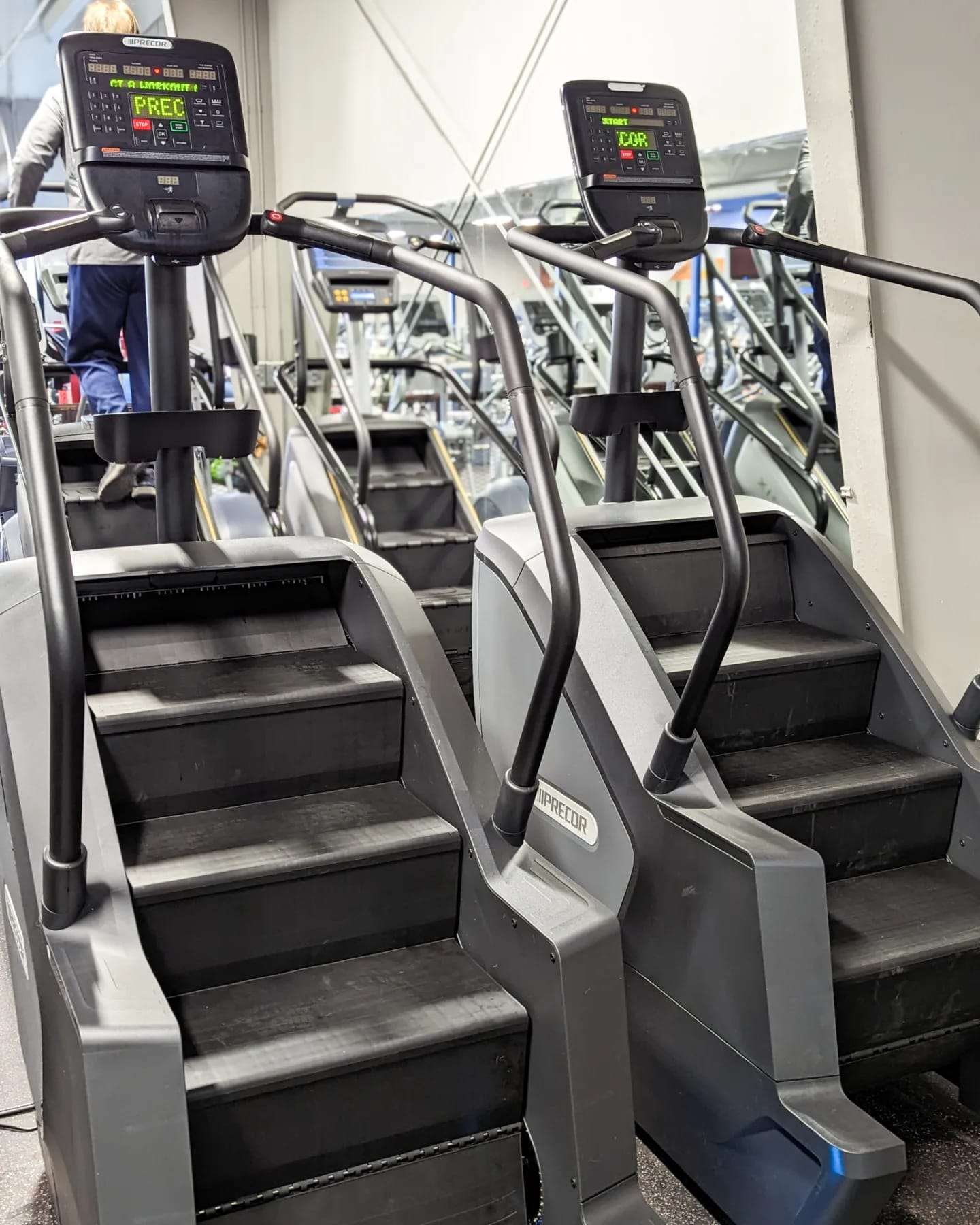
Real stairs can be used for free and feel like everyday movement. In contrast, stair climbers offer steady pacing, nonstop steps, and an indoor, easy-to-track workout.
While you’ll get similar benefits from using normal stairs or a stair climber, there are still some differences between them. Learn more about these differences below:
- Cost and Convenience: Real stairs are free and easy to work into your day at home, work, or outdoors. Stair climbers require equipment, but they give you a reliable indoor option whenever you need it.
- Pace and Programming: On a stair climber, you can set speed and use built-in interval workouts, so it’s easier to train with a plan. With regular stairs, you control the rhythm, rest, and route, which can give you more flexibility.
- Tracking and Consistency: Machines track floors, time, and pace for you, which makes progress simple to measure. Standard stairs vary from building to building, so your tracking may focus more on time and effort.
- Surface and Joint Feel: Many people find the machine’s consistent step height and indoor surface more comfortable. Real stairs can be harder, narrower, or uneven, putting more pressure on your joints.
- Real-World Skill: Practicing on actual stairs can build confidence for daily tasks like apartment steps, stadium seating, or hiking trails with long climbs. That said, the machine still builds similar cardio and leg endurance in a predictable setup.
Stairs vs Stair-Climber: Which Should I Choose?
If you want a free, flexible workout that fits real life, go with standard stairs. They’re easy to sprinkle into your day at home or work, and they feel like the kind of movement you already do in the real world, which can build confidence for everything from apartment steps to stadium climbs.
Choose a stair climber when you want structure, consistency, and an indoor option you can control. The machine’s steady, continuous stepping and consistent surfaces can also feel smoother for some people and put less strain on your joints than real-world stairs.
How Many Stairs/Minutes Make a “Good Workout”?
For a good beginner stair climbing workout, start with 10–15 minutes or 10–20 flights, then build toward 20–30 minutes.
A “good” stair workout is really about duration plus intensity. Stair climbing is typically a vigorous activity for many people, meaning a 10 or 15-minute workout can feel like plenty when you’re getting started.
If you want an extra challenge, increase your pace and try taking two steps at a time when it feels safe and controlled. As your fitness improves, you can extend total time, aim for more flights, or add light resistance like a weighted vest.
What Is Proper Stair Climbing Form?
Keep your posture tall and avoid leaning heavily on handrails so your legs and core do the work.
Stair Climbing Workout FAQs
Is Stair Climbing Better than Walking for Cardio?
Usually, stair climbing is better than walking for cardio. Since stair climbing is typically a higher-intensity workout than walking, you can boost your heart rate faster in less time.
Can You Lose Belly Fat with Stairs?
Yes, if you do it consistently and pair it with an overall calorie deficit. Over time, stair workouts can help reduce body fat and waist measurements.
Is the Stair Climber Bad for Knees?
For most people, no. Stair climbing is generally lower impact than running, and building stronger muscles around the knee can improve support.
How Many Calories Do I Burn Climbing Stairs?
While the number of calories you burn will depend on your weight and pace, one study found that people expended 8.5 to 9.2 calories per minute while climbing stairs. As a result, you may lose between 255 and 276 calories during a 30-minute stair climbing workout.
Start Stair Climbing in Albuquerque at Defined Fitness
If you’re looking for a gym with stair climbers in Santa Fe, Rio Rancho, Albuquerque, or the surrounding areas, turn to Defined Fitness. At our gyms, we offer a wide variety of pristine exercise equipment, including stair steppers. In addition to our machines, we have lots of free weights, personal trainers, group training classes, and amenities to ensure you have an incredible experience before, during, and after your workout.
Learn more about our memberships today. If you’re ready to start your free trial at one of our gyms near you in New Mexico, review our locations.