
Key Takeaways
- The Bulgarian split squat is a powerful single-leg exercise that builds lower-body strength, balance, and symmetry, with proper form and setup being key.
- A good BSS starts with your front foot far enough out that your knee stays behind your toes at the bottom of the rep — if your heel is coming up, step out more. Back foot goes on the bench, laces down. Keep your torso upright, brace your core, and lower until your back knee nearly touches the floor. Drive through your front heel to stand. Finish all your reps on one leg before switching — alternating kills your stability and momentum.
- A beginner-friendly sample push day workout can include a chest press, an overhead press, an incline press, lateral raises, and triceps pushdowns using set and rep ranges that support steady progression.
- Bulgarian split squats primarily work out quads/glutes and secondarily work out hamstrings.
A Bulgarian split squat is a single-leg squat in which your back foot is elevated, placing most of the load on your front leg. It is a highly effective way to build lower-body strength, improve balance, and train each leg independently for better symmetry.
In some studies, a BSS shows greater muscle activation in key lower limb muscles compared to bilateral exercises. These movements are often included as part of a well-rounded routine, especially when following a broader approach to foundational strength training. With the right setup and proper form, Bulgarian split squats can become one of your most productive exercises.
How to Do a Bulgarian Split Squat, Step-by-Step
Learning how to do a Bulgarian split squat starts with knowing the correct setup. Small adjustments in your stance can make a big difference in comfort, balance, and which muscles you feel working.
-
Set Your Stance
Stand about 2–3 feet in front of a bench or elevated surface. Place the top of your back foot on the bench.
-
Dial in Your Position
Instead of guessing your stance, drop into the bottom of the movement first. Your front knee should stack over your mid-foot, and your back knee should point down toward the floor.
-
Brace and Align Your Torso
Keep your chest tall for quad strength or slightly leaned forward if your goal is glute development. Engage your core to stabilize your spine and reduce unnecessary movement.
-
Lower with Control
Bend your front knee and descend slowly. Most of your weight should stay in your front leg.
-
Drive Back Up
Push through your front heel and mid-foot to return to standing. Maintain balance and avoid rushing the movement.
-
Repeat and Switch Sides
Complete all reps on one leg before switching. Remember: consistency and control matter much more than speed.
What Muscles Do Bulgarian Split Squats Work?
Knowing which muscles feel the burn the most helps you adjust movements based on your goals and training style.
- Quadriceps: The primary driver muscle, especially when your torso stays upright and the knees travel forward slightly.
- Glutes: Buttock muscles are heavily involved in hip extension, particularly if you place your front foot out further in front of you and have a slight forward lean. BSS exercises are great for focusing on hip extension while minimizing knee joint demands.
- Hamstrings: Assist with stabilization and hip extension. BSS exercises do work hamstrings, but they are not the dominant muscle group.
- Core and calves: These muscle groups support balance and joint stability throughout each movement, and are an essential part to maintaining proper Bulgarian split squat form .
Coaching Tip: Hamstring engagement increases when you lengthen your stance and hinge slightly at the hips. While a BSS works out the hamstrings, adding in Romanian deadlifts can be great for more direct hamstring loading.
Exercises that involve similar muscle groups can further round out your training, too. For example, cardio movements like stair climbing that also train glutes and quads can complement strength training while improving endurance.
BSS Variations: Dumbbell vs Barbell vs Smith Machine Methods
Adding resistance or adjusting your equipment can change both the difficulty and muscle emphasis in this lower-body routine.
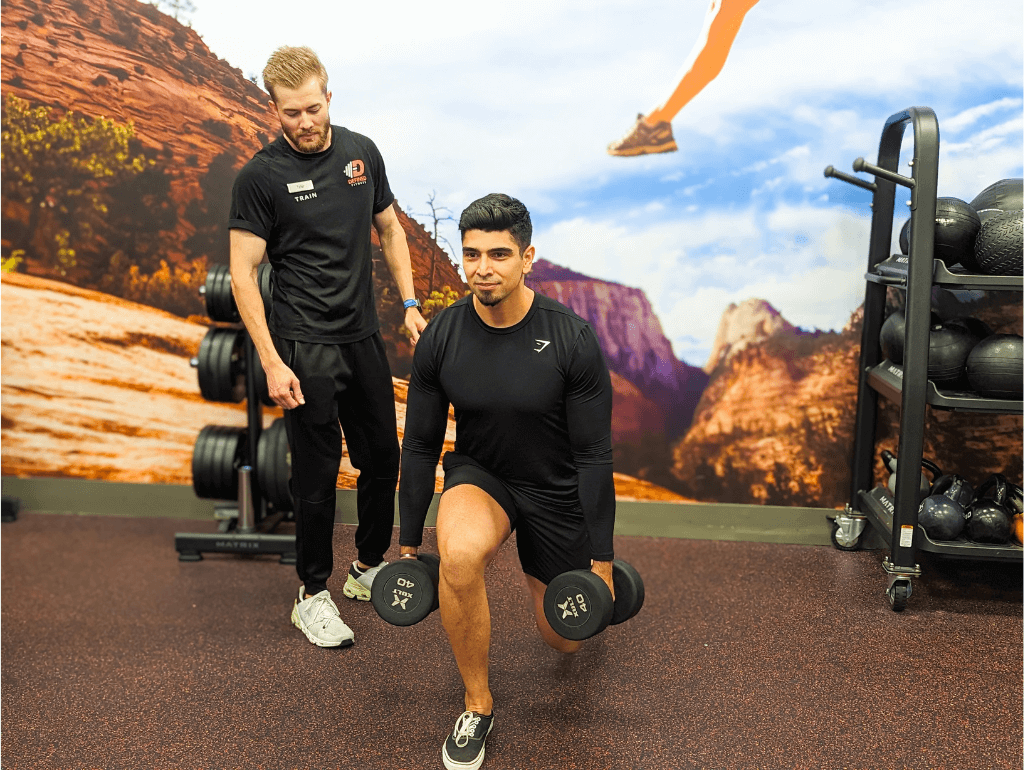
Dumbbell Bulgarian Split Squat
- Holding dumbbells at your sides allows your arms to hang naturally, which keeps your center of mass stable. This variation requires more engagement from stabilizing muscles such as the gluteus medius and your core.
- It’s also easier to adjust load gradually, making it ideal for beginners working on balance and coordination.
- Coaching Tip: Keeping the dumbbells slightly behind your hips can subtly increase glute involvement.
Barbell Bulgarian Split Squat
- With a barbell placed across your upper back, you can load the movement more heavily. This increases demand on the quadriceps and gluteus maximus while also requiring stronger core bracing to maintain spinal alignment.
- Because the load is positioned higher on the body, there is more axial loading through the spine, which makes proper positioning even more important.
- This variation is a great option for experienced lifters who have mastered basic Bulgarian split squat setup and form.
Smith Machine Bulgarian Split Squat
- The guided bar path reduces the need for balance, allowing you to focus more directly on force production in the working leg. This often leads to greater quadriceps isolation, although the glutes remain heavily involved.
- Foot placement becomes even more important here. Positioning your front foot slightly forward can increase hip flexion and shift more work to the glutes, while a closer stance will shift more work toward the quads.
- This variation can be especially helpful for hypertrophy-focused training or for those still refining technique.
While each BSS variation still trains the same major muscle groups, differences in stability, load placement, and movement control significantly influence how much each muscle contributes to the overall routine.
Glutes vs Quads: How to Shift BSS Focus
How to set up Bulgarian split squats, past the basics, changes based on if you want to focus more on training your glute muscles or your quadriceps. BSS routines are one of the most adjustable lower-body exercises, so setup changes are easy to do.
To emphasize quads:
- Keep your torso more upright to reduce the hip hinge
- Place your feet closer together to increase knee flexion
- Allow your knee to travel forward in line with your toes
To emphasize glutes:
- Take a longer stance to increase hip flexion
- Lean your torso slightly forward while maintaining a neutral spine
- Focus on driving through your heel to engage the posterior chain
Coaching Tip: Foot pressure also plays a role. Staying balanced through the mid-foot helps distribute load evenly, while putting slightly more pressure on the heel can increase glute activation.
Over time, refining these details helps you better understand what a Bulgarian split squat does for goals tied to improving strength, muscle growth, or quality of movement.
Common Bulgarian Split Squat Mistakes
-
Poor Setup and Stance
Rushing into position often leads to awkward knee tracking and balance issues. Starting slowly from the bottom position helps you find alignment before each set.
-
Too Much Weight on the Back Leg
The rear foot should provide balance, not drive the movement. Keeping most of your weight on the front leg ensures the right muscles are working.
-
Lack of Control on the Way Down
Dropping too quickly reduces muscle engagement and increases joint stress. A controlled descent improves both safety and effectiveness.
-
Inconsistent Performance Due to Fatigue
Strength and balance can decline quickly if recovery is overlooked and you push yourself too hard. Paying attention to signs you need to prioritize or improve muscle recovery helps maintain consistency and progress.
-
Incorrect Torso Positioning
Leaning forward too far or staying upright too much without intention can shift stress away from your target muscles. Match your torso angle to your goal.
How to Add Bulgarian Split Squats to Your Routine
BSS exercises fit into a variety of workout styles, making it friendly for both beginner programs and more advanced strength training. It can be a great tool to build muscle, improve stability, and correct imbalances between legs.
- Do 2–3 sets of 6–12 reps on each leg, depending on your goals
- Do them after primary compound lifts (such as squats or deadlifts) to avoid early fatigue
- Use the BSS as a primary exercise on leg days or full-body training days
Beginners: start with bodyweight or light dumbbells so you can focus on proper Bulgarian split squat form before increasing intensity.
More experienced lifters: use it as a secondary strength movement or as part of a hypertrophy-focused workout block with controlled tempos and higher volume.
Build Stronger Legs At Defined Fitness
Ready to master the Bulgarian split squat? Join Defined Fitness today, where you’ll have access to the right equipment and a supportive environment to turn good form into real progress at any of our 8 New Mexico locations.