


The Benefits of Using a Stationary Bike
Looking for a cardio workout that won’t put so much pressure on your knees? Stationary bike workouts might just be for you. As a low-impact, cardio-focused form of exercise with lots of benefits, stationary bike workouts are ideal for many people who want to add cardio to their exercise routine.
Key Takeaways
- A 30-minute ride on a stationary bike can burn between 100 and 400 calories.
- Stationary bikes can improve aerobic fitness and are linked with better blood pressure, blood sugar, sleep, and long-term heart health.
- A stationary bike workout is joint-friendly, as it’s gentle on knees, ankles, and hips, especially on a recumbent bike.
- You can easily change a bike’s resistance dials to interval train.
The Main 7 Benefits of Stationary Bikes
Whether you want to burn calories, improve your cardiovascular health, or build some lower-body strength, you have plenty of reasons to add stationary bike workouts to your routine. Check out the following seven advantages of stationary bikes for exercise:
1. Solid Calorie Burn
When you ride a stationary bike, you rely on the biggest muscles in your legs, which use a lot of energy and will cause you to burn calories. In about 30 minutes, most people burn between 100 and 400 calories, depending on body weight and how hard they pedal (we’ll go over how to calculate calorie burn on a stationary bike later!).
If you’re riding a stationary bike for weight loss, keep most rides at a comfortable, steady pace and add one or two short, harder sessions each week. Focus on a smooth pedal stroke, choose resistance that feels challenging but doable, and finish with an easy cool‑down.
2. Effective at Burning Fat
With regular indoor cycling and a modest calorie deficit, your body will begin to use stored fat for fuel.
Programs that pair cycling with smart nutrition consistently show reductions in body weight and body fat, along with improvements in blood lipids (e.g., cholesterol, HDL, LDL, etc.). For example, a 2019 review of the health benefits of indoor cycling found that stationary bike workouts consistently helped reduce body fat mass.
For a simple plan, schedule three rides per week, two at a steady, moderate pace and one with short intervals to raise your heart rate. Combine your rides with high-protein meals and two brief strength sessions to keep lean muscle while you lose fat.
3. Major Improvements to Cardio Fitness Levels
Cycling is reliable, beginner‑friendly cardio. Over time, it strengthens your heart and lungs and helps your body use oxygen more efficiently. As fitness builds, people often see benefits like lower blood pressure, steadier blood sugar, better sleep, and a lower risk of heart disease.
A practical target is about 150 minutes of moderate cycling each week. If you enjoy variety, add an interval day and balance it with easier spins so your body can adapt.
4. Increases to Lower Body Strength
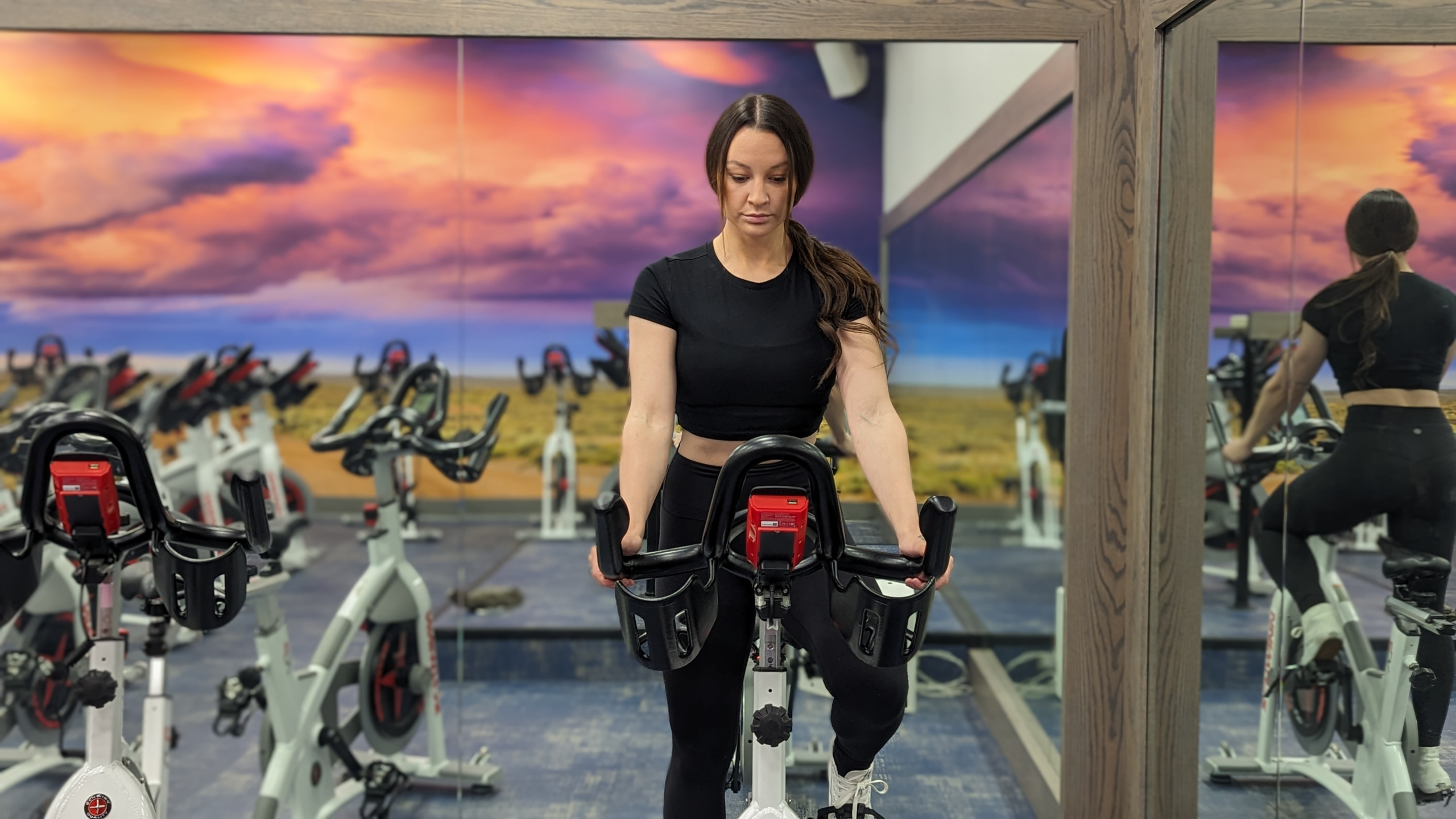
Each pedal stroke works your quads, hamstrings, glutes, and calves while your core keeps you stable. As you gradually add resistance, you’ll notice stronger legs and better endurance in everyday activities. Air bikes and models with moving handles also involve your upper body, which could lead to some upper-body strength gains.
For strength‑focused rides, try short, controlled efforts at a lower cadence with safe form, with periods where you pedal at a low resistance to recover. Add two brief total‑body strength sessions per week for the best carryover.
5. Reduced Impacts on Bones and Joints
Because you are seated and your feet stay on the pedals, a stationary bike is gentle on your knees, ankles, and hips. Many people with knee discomfort find cycling more comfortable than higher‑impact cardio, and recumbent bikes can be even easier on the joints.
To ride comfortably, set the saddle so your knee has a soft bend at the bottom of the stroke, choose smooth resistance to avoid grinding, and build time and intensity gradually.
6. Far Less Risk Compared to Road Cycling
Riding indoors gives you the benefits of cycling without traffic, weather, or visibility issues. In a controlled space, it is easier to stay consistent and focus on your effort.
Set up a fan, keep water within reach, and warm up before harder sets. When you want a road‑like feel, add resistance for short climbs, then switch to a low-intensity spin easy to recover.
7. Allows You to Easily Interval Train
A stationary bike lets you adjust intensity with a quick turn of the dial, which makes interval workouts simple and effective. Intervals that alternate strong efforts with easy recovery can boost fitness in less time.
If you’re interested in trying interval training with your stationary bike, try 6 to 10 rounds of 1 minute strong, 1 minute easy, or 20 to 30 seconds hard with 40 to 60 seconds easy. Sit tall, keep your pedal stroke smooth, and finish with a gentle cool‑down.

How to Calculate Calories Burned on a Stationary Bike by Intensity Level
While calorie estimates vary by source, we’ve put together a calorie chart based on the following formula: Calories (kcal) = activity (METs) x weight (pounds) x duration (30 minutes).
METs stands for Metabolic Equivalent of Tasks, which measures how much energy someone expends during an activity. For example, a single MET would stand for a rough estimate of how much energy it would take to just sit down without doing anything else. When you’re on a stationary bike, your MET will be higher based on your intensity level.
Keep in mind, calorie estimates aren’t exact, as a variety of factors influence how many calories you’ll expend.
How Many Calories Do You Burn on a Stationary Bike? Calories Burned During a 30-Minute Stationary Bike Workout Chart
|
Weight |
Light Intensity (Power Output = 50) |
Moderate Intensity (Power Output = 75) |
Hard Intensity (Power Output = 125.5) |
|
125 Pounds |
113 kcal |
164 kcal |
210 kcal |
|
155 Pounds |
141 kcal |
204 kcal |
260 kcal |
|
185 Pounds |
168 kcal |
243 kcal |
310 kcal |
|
215 Pounds |
195 kcal |
283 kcal |
361 kcal |
|
245 Pounds |
222 kcal |
322 kcal |
411 kcal |

Stationary Bike FAQs
Have other questions about stationary bikes? Review our answers to frequently asked stationary bike questions below:
Is a Stationary Bike Good Cardio?
Yes. Stationary bike workouts improve heart and lung fitness with low joint impact. These workouts also count toward the CDC goal of 150 minutes of aerobic activity per week.
Is 30 Minutes on a Stationary Bike Enough?
Yes, 30 minutes on a stationary bike is enough for general health if done most days. Thirty minutes at a moderate pace, five days a week, meets CDC guidelines.
For greater weight loss benefits, add time or intensity to your stationary bike workouts. Spin classes are great for those who want to up their intensity in a safe and controlled manner.
Can a Stationary Bike Help Lose Belly Fat?
Yes. Regular cycling plus a calorie deficit can reduce total and abdominal fat over time.
Stationary Bike vs. Treadmill: Which Is Better for Weight Loss and Joints?
Both can aid weight loss if you burn enough calories. However, since stationary bikes are lower impact and often easier on the knees, they’re better for your joints compared to treadmills.
Which Is Better for Bad Knees: Recumbent or Upright Stationary Bikes?
Recumbent bikes are usually kinder to knees and backs due to back support and joint angles. Upright bikes work if they feel comfortable and pain‑free.
How Long Until I See Results?
Many notice cardio gains in 2–4 weeks. Visible fat loss varies with diet, workout volume, and starting point.
Can I Ride Every Day?
Yes, if you vary intensity and include easy rides, but we’d recommend giving your body a day or two a week to recover. Take a rest or cross‑train if you feel sore or unusually fatigued.
What Muscles Does a Stationary Bike Work?
Quads, hamstrings, glutes, and calves drive the pedals. Your core stabilizes, and some bikes with handles also engage the arms.
How Should a Stationary Bike Be Set Up to Avoid Knee Pain?
Set the seat so your knee has a slight bend at the bottom of the stroke (about 25–35°). Keep knees tracking over feet and adjust fore/aft for comfort.
Are There Downsides to Stationary Bikes?
While stationary bikes have many benefits, some people find them boring compared to road cycling, while others find the saddle uncomfortable.
To reduce any discomfort or numbness on the bike, adjust the seat and bars, and use padded shorts. If you get bored on the bike, try to vary your workouts and music, or sign up for local spin classes.
Beginner vs. HIIT Stationary Bike Workout: Which Should I Do First?
Start with a beginner plan to build an aerobic base. Add HIIT 1–2 times a week once you can ride comfortably for 20–30 minutes.
What Cadence (RPM) Should I Target?
Aim for about 80–100 RPM on flats and 60–80 RPM for hill‑style efforts. Choose a cadence that feels smooth and sustainable.
Begin Your Stationary Bike Routine in New Mexico at Defined Fitness
If you’re ready to harness the benefits of stationary bikes and are looking for group cycling classes in Santa Fe, Rio Rancho, Albuquerque, or Farmington, New Mexico, Defined Fitness is ready to welcome you to one of our gyms. Our Les Mills group fitness offerings include cycling classes, which are ideal for beginners who want to begin a workout routine. Our clubs also have stationary bikes that our members can use for individual cycling workouts!
Learn more about our cycling classes today. If you’re interested in visiting one of our classes, please sign up for our free trial.