
Does Pilates Build Muscle?
You might think that Pilates is only designed to tone your core and increase your flexibility, but it can actually do much more than that. If you want to build your strength without putting on lots of muscle mass or putting lots of stress on your joints, Pilates is an excellent workout. As you build your strength, you’ll also improve your breath control, deepen your connection to your body, and enhance your overall flexibility.
Review our blog to find out how this low-impact workout can build muscle and the best type of Pilates for resistance training.
Key Takeaways About Building Muscle With Pilates
- Pilates can build muscle, particularly muscle in the core
- Reformer Pilates is best for strength training due to the additional resistance it provides
- Mat and Wall Pilates are still solid options for building core strength
Is Pilates Strength Training?
Since Pilates requires people to make controlled movements while overcoming resistance, it is a lighter form of strength training.
Though Pilates won’t require you to lift heavy weights, it excels at building strength in the core and stabilizer muscles. If your goal is to tone your muscles or increase your core strength, Pilates is a great way to do so.
That said, Pilates won’t increase your muscle mass significantly or help you make major changes in your strength level. When you want to accomplish either of those goals, you’ll need to add other forms of resistance training, like weight lifting, to your routine.
If you’re new to strength training, Pilates can be a great starter strength training workout that can help you develop a workout routine. Once you’re ready to develop your muscles more, you can shift your Pilates workouts to active recovery days.
Can Pilates Build Muscles?
Since the workout relies on controlled resistance (like springs or bodyweight), Pilates can develop muscular strength that supports posture, balance, and efficient movement.
What Muscles Does Pilates Target?
- Abs (front core): Across classic Mat exercises and Reformer work, Pilates teaches controlled bracing, precise breath, and deliberate spinal flexion so your abs do the work rather than your hips or neck. This front‑core emphasis is foundational to the method and underpins nearly every movement.
- Obliques (side core): With controlled rotation and anti‑rotation movements (think criss‑cross, side planks, and short box twists), Pilates builds the “side” core that keeps your trunk stable during turns, carries, and daily lifting. In practice, you learn to rotate from the ribs and pelvis, not just swing the arms.
- Lower back (spinal extensors): Extension exercises such as swan, swimming, and strap pulling strengthen the back side of the core so posture feels natural rather than forced. As control improves, your spine is supported by endurance in the erectors, not tension in the shoulders.
- Glutes and outer‑hip stabilizers: Bridges, side‑lying series, and Reformer footwork train hip extension and abduction, helping your glutes contribute to improving your alignment, gait, and knee tracking.
- Pelvic floor (deep core): Because breathing, centering, and lower‑ab control are baked into the workout, Pilates naturally cues pelvic‑floor engagement as part of the body’s “powerhouse,” improving stability and control.
- Shoulder and scapular stabilizers: Many upper‑body sequences focus less on big presses and more on how the shoulder blades glide, anchor, and support the arm. That emphasis on shoulder control builds shoulder stability that carries over to pressing, pulling, and posture.
Other muscles can be targeted as well, such as the hamstrings, quads, and calves during Reformer footwork and lower‑body series. Strap-based Pulling and pressing can also help target the lats, chest, and arms. Those areas get useful work, but Pilates primarily emphasizes the core, hips, pelvic floor, and shoulders.
Wall vs Mat vs Reformer Pilates for Strength
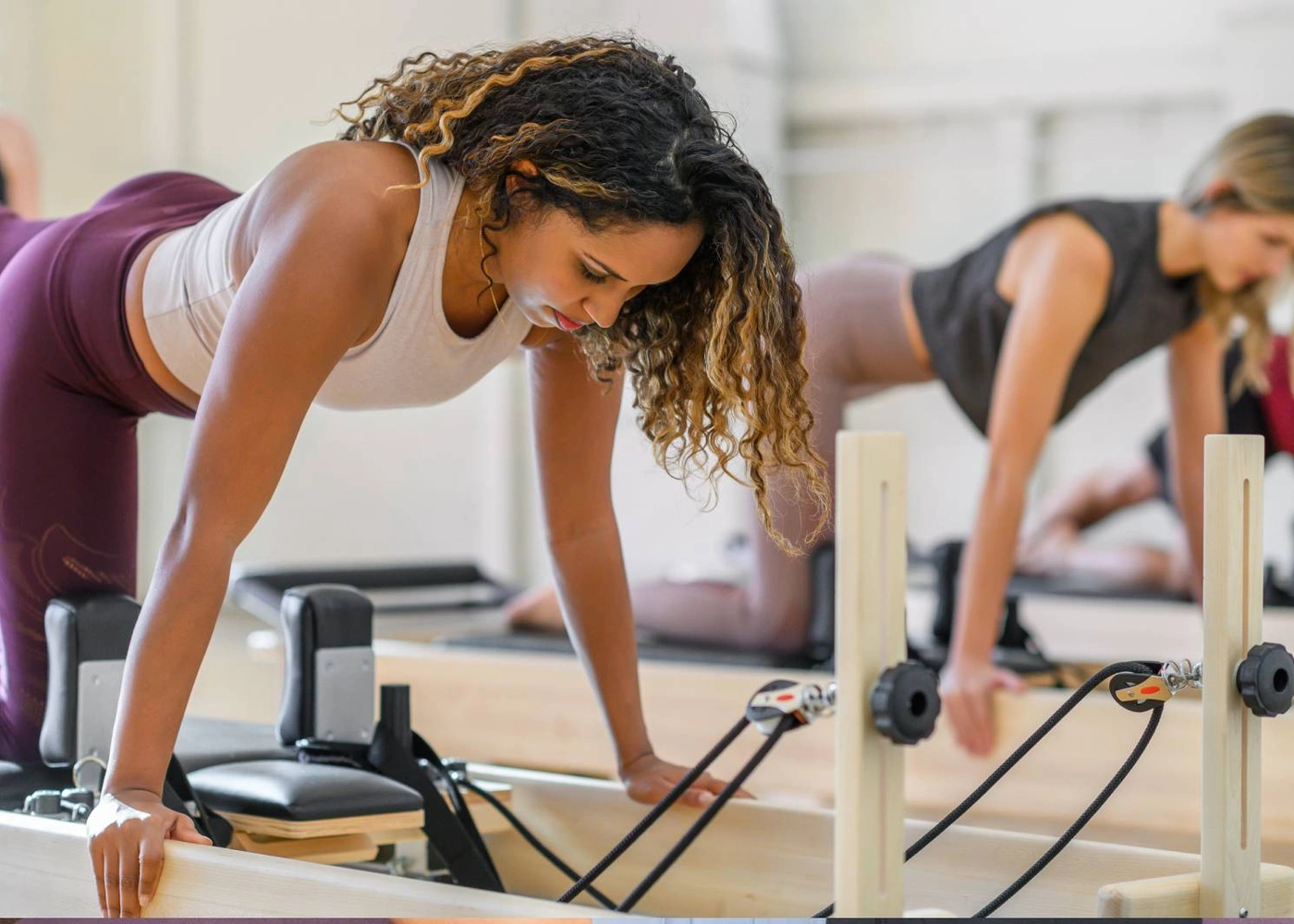
All three build strength, but Reformer Pilates is generally the most effective for strength gains because its adjustable springs provide scalable external resistance across a wide range of motion.
During Reformer Pilates, you’ll use a spring‑loaded carriage to vary resistance and strength train. In contrast, Mat Pilates uses bodyweight exercises on the floor to increase core strength, and Wall Pilates adapts Mat moves against a wall for support and light resistance.
| Method | Muscle Size Potential | Muscular Endurance | Resistance Ceiling | Best For |
|---|---|---|---|---|
| Mat Pilates | Low | Very high | Bodyweight, plus optional bands or light weights (3–15 lb) | Beginners, at-home practice, core control, and endurance |
| Reformer Pilates | Moderate | High | Adjustable springs, roughly 45–65 lb of effective load | Progressive strength gains, glute and back work, group classes |
| Wall Pilates | Low | High | Bodyweight, reduced by wall support | Beginners, alignment focus, low-impact loading |
| Weight Training | High | Moderate | Effectively unlimited, capped by your strength and equipment | Visible muscle growth, maximum strength, bone density |
Find out more about how effective each form of Pilates is for building strength below:
1. Mat Pilates
Mat Pilates reliably develops core control, balance, and lower‑limb strength through bodyweight resistance and long‑lever positions. It’s effective for foundational strength and muscular endurance, though the ability to add additional weights is limited compared with Reformer.
Signature moves include the hundred, roll‑up, side planks, and leg‑lowering series that train the abs, obliques, hips, and spinal support.
Who Is Mat Pilates For?
Best for beginners, travelers, and anyone prioritizing control and consistency without equipment.
2. Reformer Pilates
Because springs can be increased or decreased, Reformer sessions provide true progressive overload.
In a recent randomized controlled study, Reformer training outperformed Mat Pilates on several strength‑related and performance measures in athletes. In another study from 2025, Reformer Pilates also produced significant gains in muscle strength and endurance in adults training three times per week.
Exercises like footwork, short box, knee stretches, pulling straps, and rowing add closed‑chain lower‑body load and scalable upper‑back/shoulder work. The machine’s guided rails also allow long, controlled ranges that keep tension on target muscles.
Who Is Reformer Pilates For?
Ideal for people who want clearer resistance progressions, targeted glute and quad work, and scalable upper‑back and shoulder training. If you like group training, a Reformer Pilates class is a great way to strength train in an encouraging environment.
3. Wall Pilates
Wall formats use the wall as a guide and light resistance to reinforce alignment and introduce loading without machines. Common Wall Pilates exercises include wall sits, wall‑supported planks, and core sequences.
These wall-based exercises can build core and lower‑body strength and are highly accessible, but strength progression is typically more constrained than on a Reformer.
Who Is Wall Pilates For?
A good fit for beginners, at‑home exercisers, and those focused on alignment or low‑impact options.
FAQs About Pilates and Strength Training
Does Pilates Build Muscle or Just “Tone”?
Pilates does build muscle, especially in your core and hips. However, it focuses on control and endurance more than size, making it more focused on toning your muscles rather than making them larger.
Is Pilates Resistance Training, and How Is the Resistance Created?
Yes. You work against your bodyweight and, on the Reformer, adjustable springs. Slower tempos and longer lever positions also create resistance even without heavy weights.
How Often Should I Do Pilates to See Results in Strength or Muscle Definition?
Most people notice changes with 2–4 sessions per week, especially if one or two are on the Reformer. Consistency and rest days matter as much as the specific moves.
Does Reformer Build Muscle Better Than Mat? Why?
Often yes. Reformer sessions make it easier to increase resistance and maintain tension on target muscles, which is why several trials show greater strength and performance gains than Mat-only sessions.
Which Is Better for Muscle Growth: Pilates or Lifting Weights?
For visible size gains, traditional weight training is better because you can train with heavier weights and progress faster. Pilates still builds strength and pairs well with lifting for joint-friendly results.
Can Pilates Lead to Hypertrophy (Visible Muscle Growth)? How Can I Make Pilates More Hypertrophy‑Oriented?
Beginners can add some muscle with Pilates, but big size increases are less likely. To push growth, use heavier springs, slow the lowering phase, and add extra sets while making sure to rest between sessions.
Does Pilates Build Glutes? Which Pilates Moves Target the Glutes Best?
Yes. Bridges, side‑lying leg lifts, clamshells, and Reformer footwork all target the glutes, helping posture and hip–knee alignment.
Is Pilates Good for Men Who Want to Get Stronger?
Absolutely. Pilates improves core strength, mobility, and balance, which supports lifting, sports, and daily tasks for men.
What Muscles Does Pilates Work the Most?
Pilates centers on the core (abs, obliques, lower back, hips/glutes, and pelvic floor) and shoulder blades to improve posture. That core‑first focus carries over to how you move in and out of the gym, with many functional benefits.
What Results Can I Expect From Wall Pilates?
Wall Pilates helps with alignment and beginner‑friendly loading for the core and legs (planks, wall sits). It’s effective, though you won’t see as much of an improvement to your strength as you would with Reformer.
Is Pilates Good for Weight Loss, and How Should I Pair It With Cardio or Nutrition?
Pilates supports weight loss by helping people burn calories, but fat loss mostly comes from a calorie deficit. Pair Pilates with regular cardio and balanced, higher‑protein meals.
Can I Gain Muscle With Pilates If I Already Lift Weights? How Do I Combine the Two?
Yes. Keep 2+ lifting days for heavier loads and add Pilates 2–3 days for core control, mobility, and shoulder/hip stability.
By combining the functional strength benefits of Pilates with heavier weight-lifting sessions, you can increase muscle mass without sacrificing flexibility.
How Long Does It Take to Notice Changes From Pilates (Strength, Posture, or Definition)?
With steady practice, many beginners feel better posture and core engagement in 2–4 weeks, with visible definition building over 6–8+ weeks.
Is Pilates Enough for Bone Health and Longevity, or Should I Add Other Strength Work?
Pilates improves strength, balance, and posture, but for bone health, you’ll also want to include impact exercises (like brisk walking or jogging if appropriate) and heavier resistance work.
Take a Pilates Class in New Mexico at Defined Fitness
If you’re looking for a Pilates class in Albuquerque, Santa Fe, Rio Rancho, or the surrounding areas, turn to Defined Fitness. When you visit one of our full-service gyms, you’ll have the opportunity to sign up for a variety of mind-body classes that include Pilates and Yoga to build mental clarity, strength, and flexibility. Our gyms also feature pristine workout equipment, a wide selection of free weights, and amenities for recovering, childcare, and swimming.
Review our Pilates classes today. If you’re interested in trying one of our gyms, please sign up for our free trial.