

Key Takeaways
- Albuquerque sits around 5,300 feet while Sandia Crest tops out at 10,678 feet, so your aerobic capacity drops and your training needs to account for that altitude jump.
- Incline treadmill and stair climber sessions build the steady-state endurance you need for sustained climbs like La Luz Trail's roughly 3,200-foot gain.
- Weighted step-ups, Bulgarian split squats, and Romanian deadlifts build the single-leg strength and hamstring control that steep, sustained climbs and safer descents both require.
- Farmer's carries, planks, and deadbugs build the core stability and balance you need for uneven, rocky terrain like Tree Spring Trail.
- Training two to three times a week for four to six weeks before a big hike gives your body enough time to adapt to what the trail will demand.
You’ve hiked local trails all summer without much trouble, so the drive up NM-536 feels like just another day outside. Then the first mile of switchbacks leaves you breathing harder than flat-ground training ever predicted.
Hiking in the Sandia Mountains puts a different kind of stress on your body than a walk through the foothills. The climbs run steeper, the ground gets rockier, and the air holds less oxygen the higher you go. Strength training for hiking gives your legs, lungs, and core a head start before you ever reach the trailhead.
Why Hiking in the Sandia Mountains Demands More From Your Training
Albuquerque sits at roughly 5,300 feet above sea level, and Sandia Crest tops out at 10,678 feet.
Maximal aerobic capacity, known as VO2 max, starts declining at altitudes as low as 1,900 feet and keeps dropping as you climb higher. Your heart and lungs have less oxygen to work with, so a pace that feels moderate at sea level can feel like a sprint partway up the mountain.
This altitude gap is exactly why a treadmill walk alone won’t cut it. The right exercises to prepare for hiking build aerobic capacity and leg strength together, before you’re on an exposed switchback with a full water bottle and no shade in sight.
8 Gym Workouts to Do Before Hiking the Sandia Mountains
The best exercises for hiking match specific movements to specific trail demands. These eight build the cardio endurance, leg strength, and core stability that Sandia Mountains hiking actually requires, organized around what you’ll feel on trails like La Luz and Tree Spring.
1. Incline Treadmill Training
Among cardio exercises for hiking, the incline treadmill comes closest to replicating a sustained mountain climb. Set the incline between 8 and 15 percent and walk at a pace you can hold for 20 to 30 minutes without stopping.
This pace builds the kind of steady-state endurance La Luz Trail demands, with its climb of roughly 3,200 feet over 7.5 miles. Rather than short bursts of speed, focus on time spent climbing continuously, since that mirrors switchback after switchback on the way toward Sandia Crest.
2. Stair Climber Sessions
The stair climber trains the same uphill muscles as incline walking, but with a steeper, more repetitive motion that builds muscular endurance in your calves, quads, and glutes.
Start with 15 to 20 minutes at a moderate pace and extend the duration as your fitness improves. It’s also a useful, low-impact option if your hiking exercise routine needs to go easier on your knees than running does, since Sandia Mountain hiking trails rarely offer flat stretches to recover on.

3. Weighted Step-Ups
Step-ups are one of the most direct exercises for hiking uphill because they isolate the same single-leg push you use on every trail step. Stand in front of a box or bench roughly knee height, step up fully with one leg, and drive through your heel until you’re standing tall.
A few cues make the movement more effective:
La Luz Trail climbs from around 7,000 feet at the trailhead to the crest at 10,678 feet, and that kind of sustained climb depends on quads and glutes that can fire repeatedly without giving out. Training this movement with control builds the specific strength you’ll lean on mile after mile of switchbacks.
4. Bulgarian Split Squats
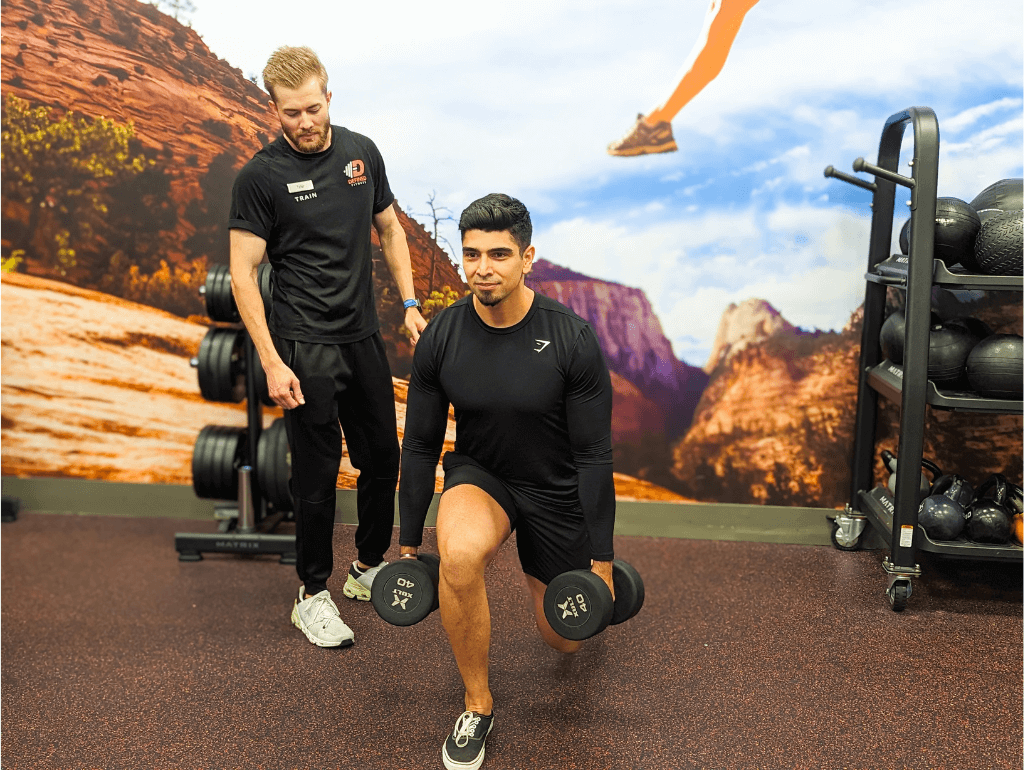
The Bulgarian split squat builds on the step-up by adding balance and a deeper range of motion, both of which matter on a mountain trail. Set your back foot on a bench behind you, lower your front knee toward the floor, and drive back up through your front heel.
This single-leg strength carries over directly to steep, sustained climbs like La Luz, where uneven footing means one leg often works harder than the other for several steps in a row. Training each leg independently also helps correct side-to-side strength imbalances, which often show up as wobbly footing near the top of a long climb.
5. Romanian Deadlifts
Romanian deadlifts target the hamstrings and glutes, the muscles that control your descent as much as your climb.
Hold a barbell or dumbbells at your hips, hinge forward while keeping your back flat, and lower the weight until you feel a stretch in your hamstrings. Downhill sections put more load on these muscles than most hikers expect, so building hamstring strength ahead of time helps protect your knees on the way down as much as it helps you push uphill.
6. Farmer's Carries
Farmer’s carries build the total-body stability you need for uneven footing, which is exactly what you’ll find on Tree Spring Trail. Its roughly 1,000 feet of elevation gain over two miles comes with rocky, root-covered ground that challenges your balance more than a smooth incline does.
The carry works your grip, forearms, shoulders, upper back, hips, and legs all at once, alongside your core, which is the same kind of full-body engagement a loaded pack demands on uneven terrain.
A few variations target slightly different parts of that stability:
- Suitcase carry: hold one dumbbell in a single hand while the other stays free, which forces your core to resist tipping to one side, similar to the way a loaded pack shifts your balance on uneven ground.
- Rack carry: hold two kettlebells at shoulder height, which builds the upper-back endurance that keeps a pack's shoulder straps from digging in on a long climb.
- Standard farmer's carry: hold a heavy dumbbell or kettlebell in each hand and walk a set distance while keeping your shoulders level, the most direct version for building grip and core stability together.
Whichever variation you choose, keep your core braced and your steps controlled rather than rushed.
7. Planks
A strong core keeps your torso stable when the trail underneath you isn’t, which matters most on rocky, technical ground like Tree Spring. Hold a plank position with your forearms on the floor, body in a straight line from head to heels, and work up to holds of 30 to 60 seconds.

8. Deadbugs
Deadbugs train your core to stay stable while your arms and legs move independently, which mirrors what happens naturally when you’re navigating loose rocks or roots. Lie on your back with knees bent at 90 degrees and arms extended toward the ceiling.
Slowly lower one arm and the opposite leg toward the floor without letting your lower back arch off the ground, and reset before switching sides. This controlled, low-impact movement builds the coordination that keeps you balanced when one foot lands awkwardly on hiking trails in Sandia Mountains, and it doubles as a useful accessory movement on days when your legs need a break from heavier lifting.
A Sample Gym Workout to Prep for a Sandia Hike
Pulling from each of the eight exercises above, this hiking exercise plan gives you a repeatable session to build ahead of your next Sandia Mountains hiking trip. Aim to train this way two to three times per week for four to six weeks before a big climb.
- Incline treadmill: 20–30 minutes at 8–15% incline
- Stair climber: 15–20 minutes at a steady pace
- Weighted step-ups: 3 sets of 10–12 reps per leg
- Bulgarian split squats: 3 sets of 8–10 reps per leg
- Romanian deadlifts: 3 sets of 10 reps
- Farmer's carries: 3 sets of 40–60 second carries
- Planks: 3 sets, holding 30–60 seconds
- Deadbugs: 3 sets of 8–10 reps per side
Adjust the load and duration as your fitness builds, and layer in an actual hike every one to two weeks so your training and your trail time reinforce each other.

FAQs
What Is the Best Way to Train for a Sandia Crest Hike?
Combine cardio like incline treadmill work with leg strength and core stability training two to three times a week for four to six weeks before your hike.
Do I Need to Train Differently for High-Altitude Hikes Like the Sandia Mountains?
Yes. Lower oxygen at altitude reduces aerobic capacity, so building cardio endurance in the gym beforehand matters more than it does at sea level.
How Long Should I Train Before Hiking La Luz Trail?
Most hikers benefit from four to six weeks of consistent strength and cardio training before attempting La Luz Trail’s roughly 3,200-foot climb.
Train for the Trail at Defined Fitness
Defined Fitness operates eight club locations across New Mexico, including Santa Fe, four Albuquerque locations, two in Rio Rancho, and Farmington. The Defined Fitness Sandia Club sits on Juan Tabo, minutes from the mountains, with incline-ready cardio equipment, a full free weight area, and trainers who can help you build the strength this trail range demands.
Start with a 3-day free trial to get familiar with the equipment before you hit the trail, and find a Defined Fitness location near you to get started.