
Key Takeaways
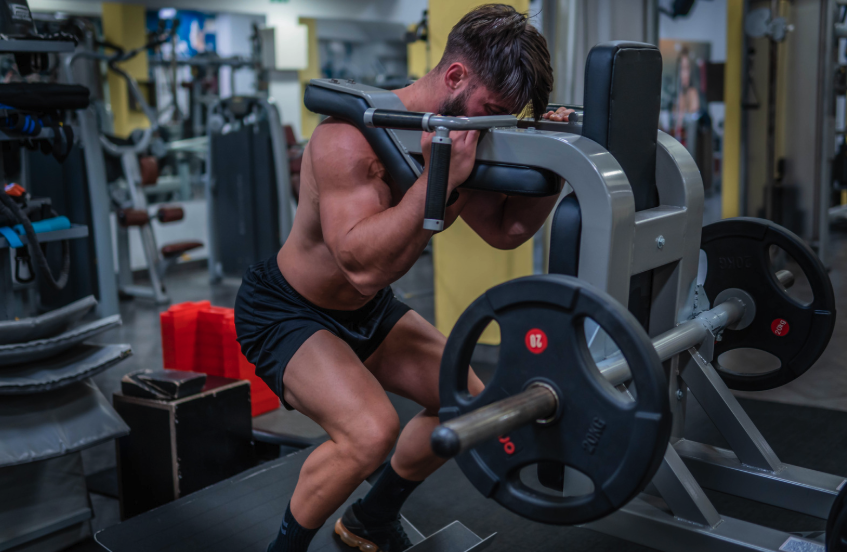
- To do a hack squat with proper form: position your shoulders under the pads, lower yourself with control until your thighs are parallel to the platform, then drive back up through your heels. Keep your spine neutral and brace your core throughout each rep.
- Hack squats primarily target the quads. The glutes, hamstrings, inner thighs, calves, and core all assist as secondary muscles.
- Where you place your feet changes which muscles work harder. A standard stance builds overall lower body strength. Low foot placement puts more emphasis on the quads. High foot placement shifts more work to the glutes and hamstrings. A wide stance targets the inner thighs and glutes.
- Hack squats, leg presses, and barbell squats each have different strengths. Using all three in your training tends to produce better long-term results than relying on just one.
- The main benefits of hack squats are stronger quads and legs, more stability than free weights, fewer balance demands, less strain on the spine, and the ability to keep training with good form even as you fatigue.
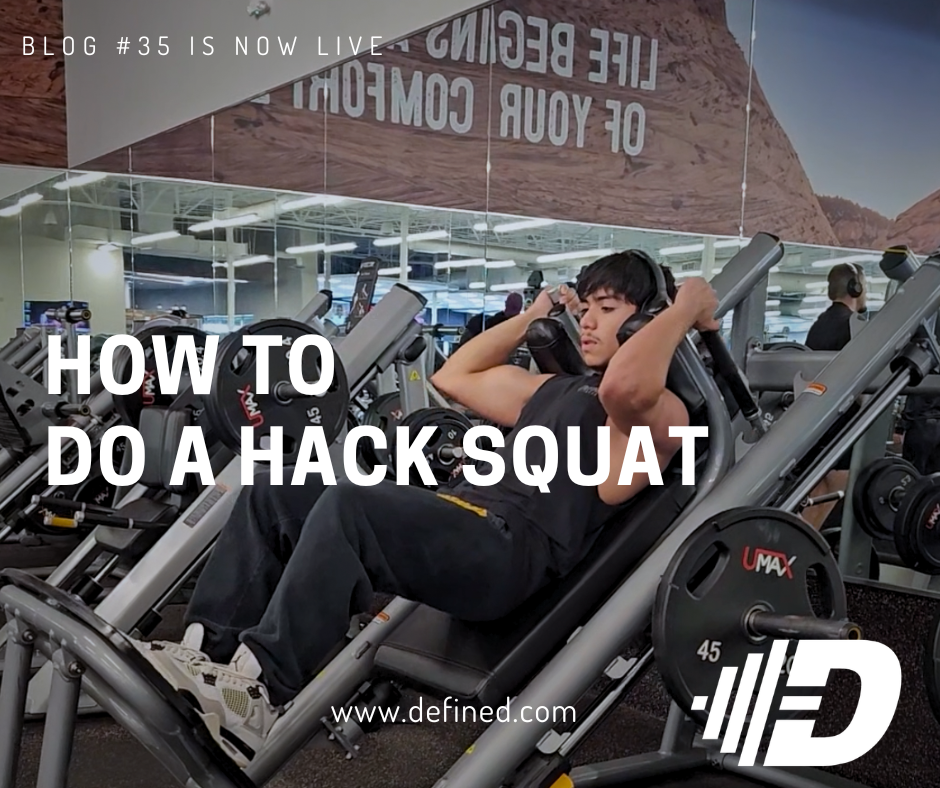
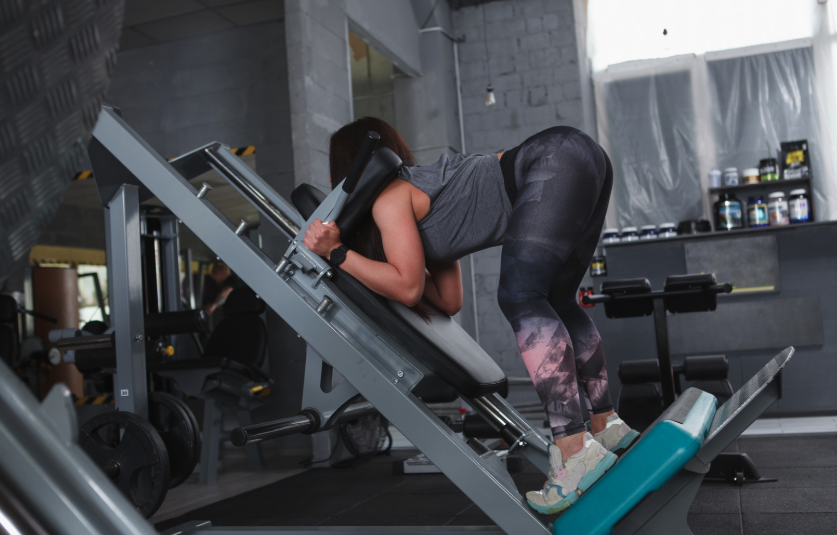
The hack squat is a squat variation performed on a machine. Unlike a barbell squat, the machine controls your movement path, so you can focus entirely on building strength rather than balancing the weight. That makes it approachable for beginners and useful for experienced lifters who want to target their quads and lower body.
How to Do a Hack Squat With Proper Form
Proper hack squat form begins before you even move the sled. Taking a few moments to set up correctly helps you move comfortably and target the right muscles.
Step 1: Set Your Body Position
- Position your shoulders firmly underneath the pads and keep your entire back against the backrest throughout the exercise.
- Place your feet about shoulder-width apart near the center of the platform. This provides a balanced stance for most beginners.
- Unlock the safety handles and stand tall with your knees slightly bent.
Coaching Tip: Starting with the empty sled or a light weight is a great way to practice the movement pattern before adding resistance.
Step 2: Lower Yourself Under Control
- Bend your knees and hips together as you descend.
- Keep your chest up and maintain a neutral spine.
- Lower until your thighs are roughly parallel to the platform, or slightly deeper if your mobility allows.
- Keep your heels planted and your weight evenly distributed across your feet.
Coaching Tip: Avoid rushing the descent. Controlling the lowering phase helps maintain proper hack squat form and keeps tension on the working muscles.
Step 3: Drive Your Body Back Up
- Push through your midfoot and heels to begin the ascent.
- Straighten your knees and hips together.
- Return to the starting position without locking your knees completely.
Coaching Tip: Smooth, controlled repetitions are usually more effective than trying to move the sled as quickly as possible.
Breathing and Bracing Advice
Remember to breathe! Good breathing habits help create stability throughout each movement.
- Inhale before lowering into the squat.
- Brace your abdominal muscles as though preparing for a gentle punch.
- Exhale as you stand back up.
Recommended Sets and Reps
- To build muscle size, perform 3 to 4 sets of 8 to 15 reps with moderate weight.
- To build strength, perform 3 to 5 sets of 5 to 8 reps with heavier weight.
- Beginners should start with an empty sled and focus on learning the movement before adding weight.
What Muscles Do Hack Squats Work?
Several muscles work together during the exercise.
Primary Muscles Worked
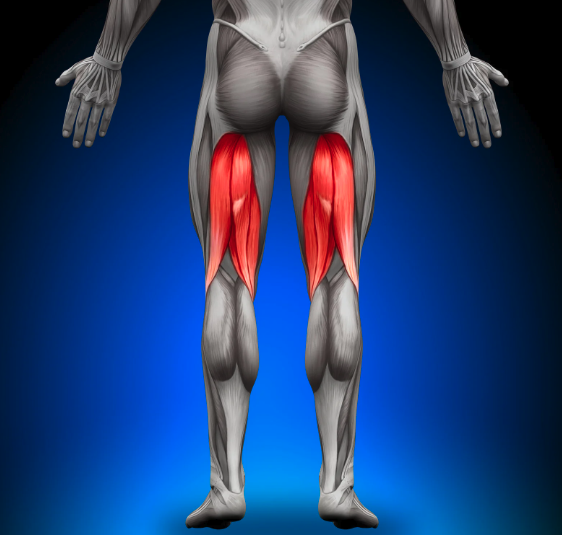
The quadriceps, or the front of thigh muscles, are the primary muscles that work the hardest in hack squats. Because they provide most of the force during movement and straighten the knees, the quads are key to every form of the exercise.
Secondary Muscles Worked
- The gluteus maximus, or buttocks muscles, helps to extend the hips.
- The hamstrings, or back of thigh muscles, assist with stabilization.
- The adductors, or inner thigh muscles, help control movement.
- The calf muscles and abdominal muscles provide support and balance.
Want to shift the emphasis on these muscle groups? Changing hack squat foot positions shift which muscles work harder, allowing the exercise to be tailored toward different goals.
Hack Squat Foot Placement: How Foot Position Changes Muscle Emphasis
Small changes in how you position your feet shift which muscles do more of the work. Experimenting with different positions helps you emphasize specific muscle groups while finding the stance that feels most comfortable.
Standard Foot Position
A shoulder-width stance with your feet centered on the platform is the most common starting point. It spreads the work across your quads, glutes, hamstrings, and inner thighs, making it a good all-around position for lower body development. For most people it’s also the most comfortable stance to learn on and allows for the best range of motion.
The main fix is that “balanced lower-body development” and “best combination of comfort, depth, and overall muscle recruitment” were both just vague ways of saying the same thing, so combining them into one clear thought tightens it up.
Low Foot Placement
Placing your feet lower on the platform bends your knees more deeply and puts more of the work on your quads. This makes it a good choice if quad development is your main goal. Because of the increased knee bend, keeping your heels flat on the platform is especially important in this position.
High Foot Placement
Positioning your feet higher on the platform increases involvement from the glutes and hamstrings.
Many lifters find this position allows them to sit deeper into the squat and can feel more comfortable on the knees.
Wide Stance Foot Placement
A wider stance demands more work from the adductors and glutes while allowing some people to achieve additional depth.
This variation can be useful for those looking to train the inner thigh region alongside the larger lower-body muscles.
Hack Squats for Glutes: Do They Work?
Yes. Even though the exercise naturally emphasizes the quads, hack squats for glutes can be effective.
To get a better glute workout in a hack squat:
- Place your feet slightly higher on the platform to involve the glutes more.
- Use a full range of motion so the glutes can contribute through the entire movement.
- Drive through your heels rather than your toes to get more out of the hip extension.
- Lower yourself slowly to keep tension on the glutes throughout the rep.
How to Do a Reverse Hack Squat Variation
A reverse hack squat is performed facing the machine rather than facing outward. This variation shifts more emphasis to the glutes and hamstrings while reducing some of the quad dominance found in the traditional version.
It can be an especially helpful hack squat variation for lifters who want additional posterior chain training or simply want more variety in their leg day workouts.
Hack Squat vs Leg Press vs Squat Comparisons
Each exercise offers unique advantages, and many workout plans benefit from including a mix of each.
Hack Squat vs Leg Press Workouts
Both exercises train the lower body, but they feel very different.
- Hack squats more closely mimic a traditional squat pattern.
- Hack squats require more stabilization from the core and upper body.
- Leg presses provide greater back support and often allow for heavier loading.
Both exercises are excellent choices, and the best option depends on your goals.
Hack Squat vs Squat (AKA the Barbell Squat or Back Squat)
Traditional back squats use more muscles throughout the body and require greater balance compared to the lower body heavy hack squat.
Compared with barbell squats:
- Hack squats provide a fixed movement path.
- Machine hack squats place less stress on the spine.
- Barbell squats, or regular squats, require more coordination and stabilization.
- Hack squats are often easier for beginners to learn, making back squats a great intermediate exercise to work towards.
Which Squat Exercise Variation Is Better?
There isn’t one universally superior choice. If you’re looking for long-term strength benefits throughout the whole body, combining multiple squat variations often provides the greatest fitness payoff.
- Choose hack squats for focused quad development and machine-guided stability.
- Choose leg presses for high-volume lower-body training.
- Choose barbell squats for overall strength and athletic development.
If you enjoy unilateral exercises, adding Bulgarian split squats alongside hack squat workouts can further improve lower-body strength and balance.
Top Hack Squat Benefits
Building stronger legs is one of many hack squat benefits. The exercise offers several advantages for beginners and experienced lifters alike:
- Improved lower-body strength, especially in the quadriceps, while allowing for progressive loading over time.
- Greater stability compared to free weights, which helps many people focus on technique and consistency.
- Reduced balance demands, making hack squat movements easier to learn.
- Less spinal stress and weight loading versus traditional barbell squats, which can make the exercise more comfortable for some lifters.
- The ability to keep training in a controlled environment when muscle fatigue is close.
Because the machine provides hack squat support, many people find it easier to focus on depth, tempo, and quality repetitions without worrying as much about losing their balance.
Find Your Footing At Defined Fitness
Every great squat starts with a strong foundation. Whether you’re learning your first hack squat or refining your technique, the team at Defined Fitness is here to support you.
Try a free 3-day trial membership or visit any of our 8 New Mexico gyms to see why we’re the best gym for individuals and families who want to keep building strength with confidence.